Multi-Layer Interface System

A unified, role-based digital ecosystem to orchestrate material flows, production tasks, and real-time visibility across a distributed manufacturing plant

2025
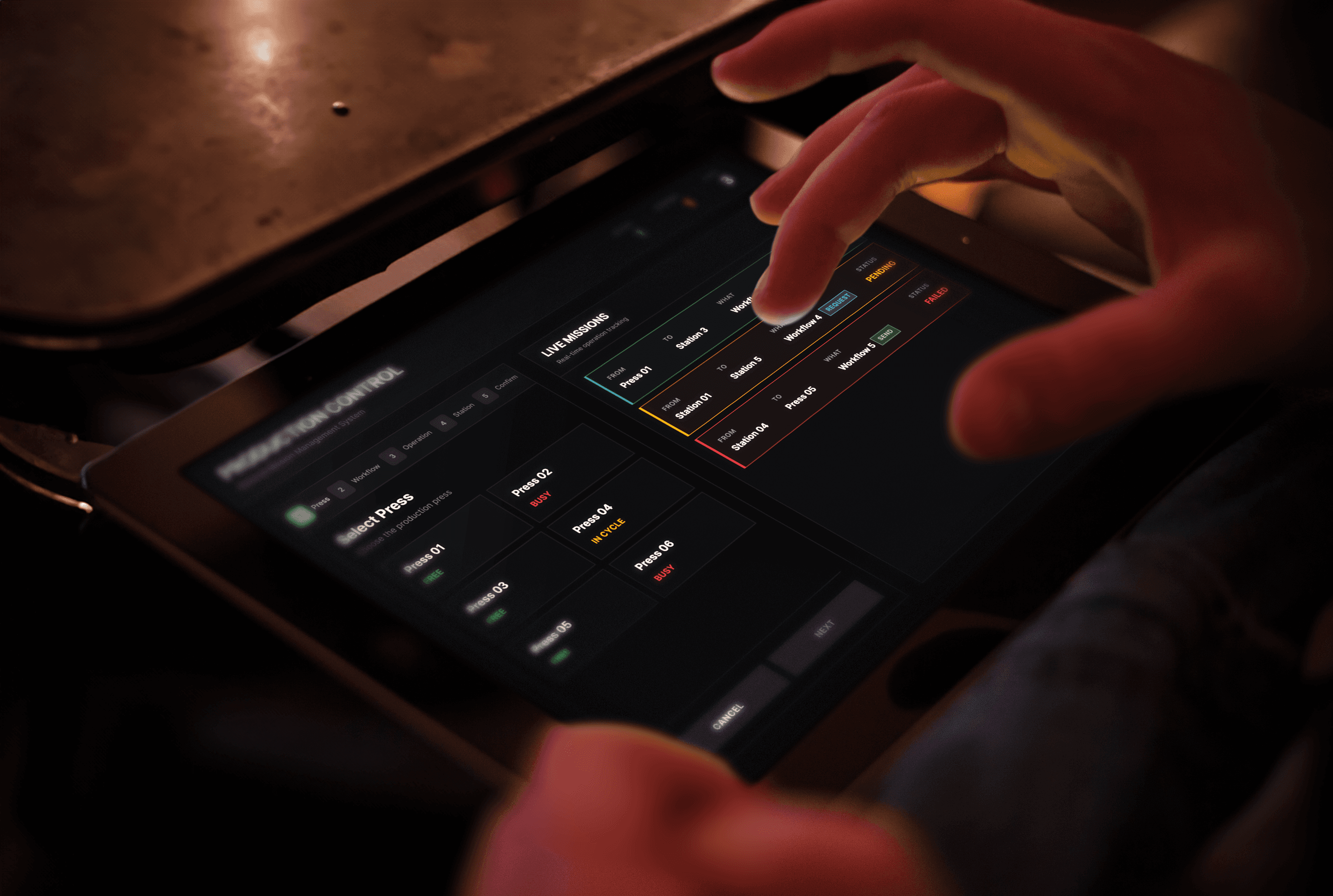
Context

A manufacturing customer manifested the need to optimize their production performance by introducing automation and improving coordination across a highly fragmented workflow.
The plant operated across three physically distant areas:

  • A warehouse, where raw materials arrived

  • A central buffer, handled by forklift operators

  • A production area, where components were produced

Before our intervention, the entire process relied on manual communication, no real-time visibility, and no structured tracking.

Operators essentially “worked by gut feeling,” without knowing:

  • What was currently being produced

  • What needed to be produced next

  • Material availability

  • When incoming materials would arrive

  • Which stations were free or occupied

The lack of coordination caused delays, misalignments, and an overall unstable workflow.

Context

A manufacturing customer manifested the need to optimize their production performance by introducing automation and improving coordination across a highly fragmented workflow.
The plant operated across three physically distant areas:

  • A warehouse, where raw materials arrived

  • A central buffer, handled by forklift operators

  • A production area, where components were produced

Before our intervention, the entire process relied on manual communication, no real-time visibility, and no structured tracking.

Operators essentially “worked by gut feeling,” without knowing:

  • What was currently being produced

  • What needed to be produced next

  • Material availability

  • When incoming materials would arrive

  • Which stations were free or occupied

The lack of coordination caused delays, misalignments, and an overall unstable workflow.

Problem

Each operator category had different needs and without the right information architecture, the whole system collapsed.

Warehouse operator needed to know:

  • Which raw materials had been requested

  • Where to pick them up

  • Where to deliver them

Production Operator needed to:

  • Request raw materials

  • Send finished goods to the central buffer

  • Know which stations were allocated and free

  • Track the progress of each production batch

Plant Operator needed:

  • A global view of all activities

  • A real-time map of flows, stations, and material status

  • Insights to optimize daily decisions

The challenge was to build three differentiated, role-based interfaces that stayed connected to the same operational truth without overwhelming any user.

Problem

Each operator category had different needs and without the right information architecture, the whole system collapsed.

Warehouse operator needed to know:

  • Which raw materials had been requested

  • Where to pick them up

  • Where to deliver them

Production Operator needed to:

  • Request raw materials

  • Send finished goods to the central buffer

  • Know which stations were allocated and free

  • Track the progress of each production batch

Plant Operator needed:

  • A global view of all activities

  • A real-time map of flows, stations, and material status

  • Insights to optimize daily decisions

The challenge was to build three differentiated, role-based interfaces that stayed connected to the same operational truth without overwhelming any user.

My Role

I led the full design strategy and execution, including:

  • Research and interviews with plant managers and operators

  • Designing the information architecture for three user types

  • Creating the multi-layer interface ecosystem (HMI + dashboards)

  • Defining flows for requests, deliveries, material tracking, and station allocation

  • Coordinating with developers and automation engineers

  • Aligning the digital experience with physical workflows and AMR logistics

  • Ensuring each interface only exposed what was relevant for each role

This was a complex, system-driven product challenge requiring clarity, prioritization, and deep understanding of industrial workflows.

My Role

I led the full design strategy and execution, including:

  • Research and interviews with plant managers and operators

  • Designing the information architecture for three user types

  • Creating the multi-layer interface ecosystem (HMI + dashboards)

  • Defining flows for requests, deliveries, material tracking, and station allocation

  • Coordinating with developers and automation engineers

  • Aligning the digital experience with physical workflows and AMR logistics

  • Ensuring each interface only exposed what was relevant for each role

This was a complex, system-driven product challenge requiring clarity, prioritization, and deep understanding of industrial workflows.

The Journey

1.

Discovery & Field Research

Goals:

  • Understand operator pain points

  • Map work cycles and hidden frictions

  • Gather functional needs and environment constraints

Activities:

  • On-site shadowing of warehouse and production operators

  • Interviews with plant manager and shift supervisors

  • Flow analysis for material movement and production batches

  • Early identification of bottlenecks

Key insight:
The entire system lacked a single source of truth, leading to inconsistent decisions and inefficiencies.
2.

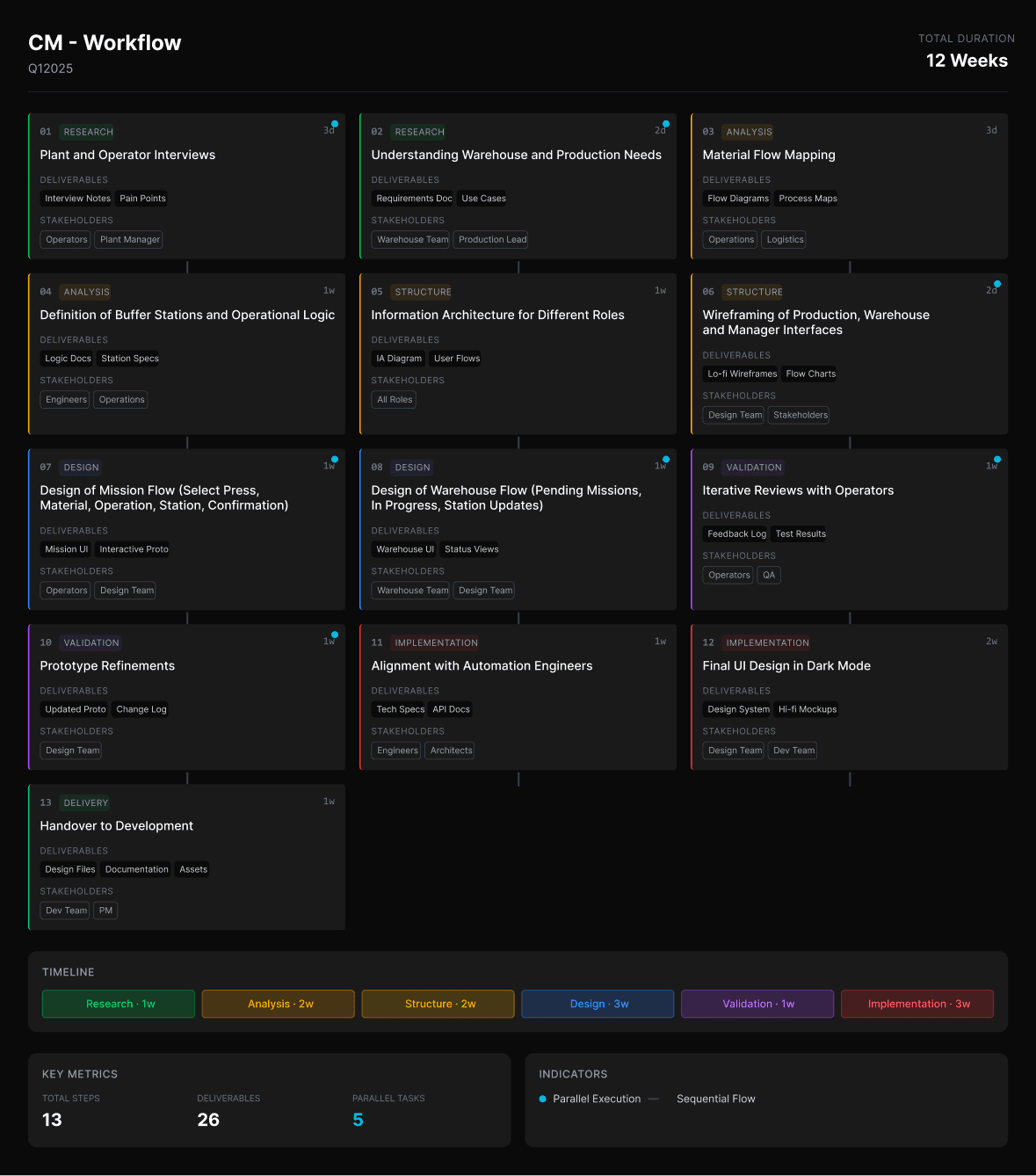
System Mapping & Workflow Architecture

I mapped the full material flow:

  1. Raw material arrival

  2. Warehouse allocation

  3. Transfer to buffer

  4. Production usage

  5. Finished goods back to buffer

  6. Re-stocking / outbound

For the first time, we translated the physical system into a digital workflow architecture, including:

  • Station states

  • Material identities

  • Request cycles

  • Operator actions

  • AMR/automation events (where relevant)

This allowed us to design interfaces grounded in real operational logic, not assumptions.
3.

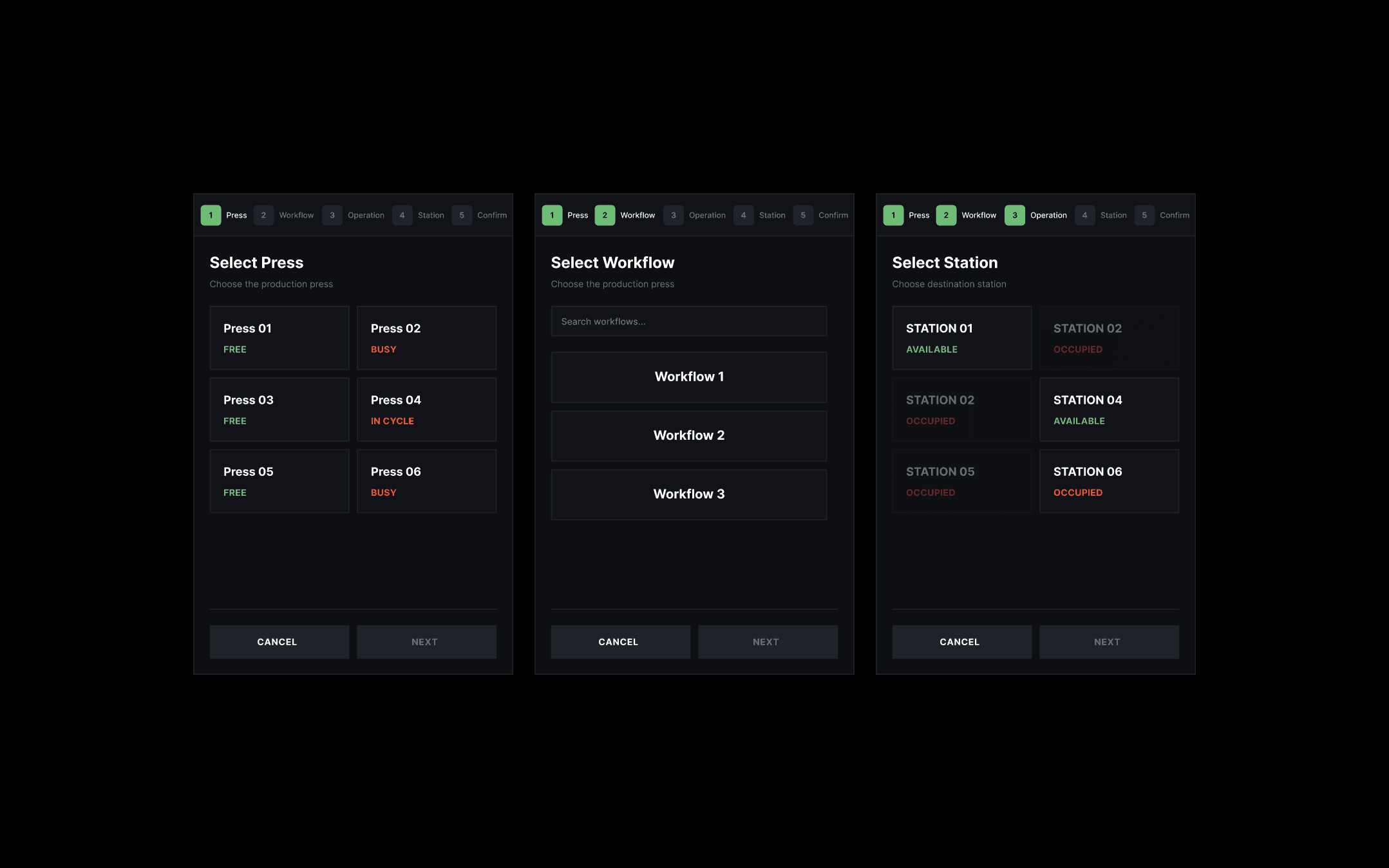
Role-Based Interface Design

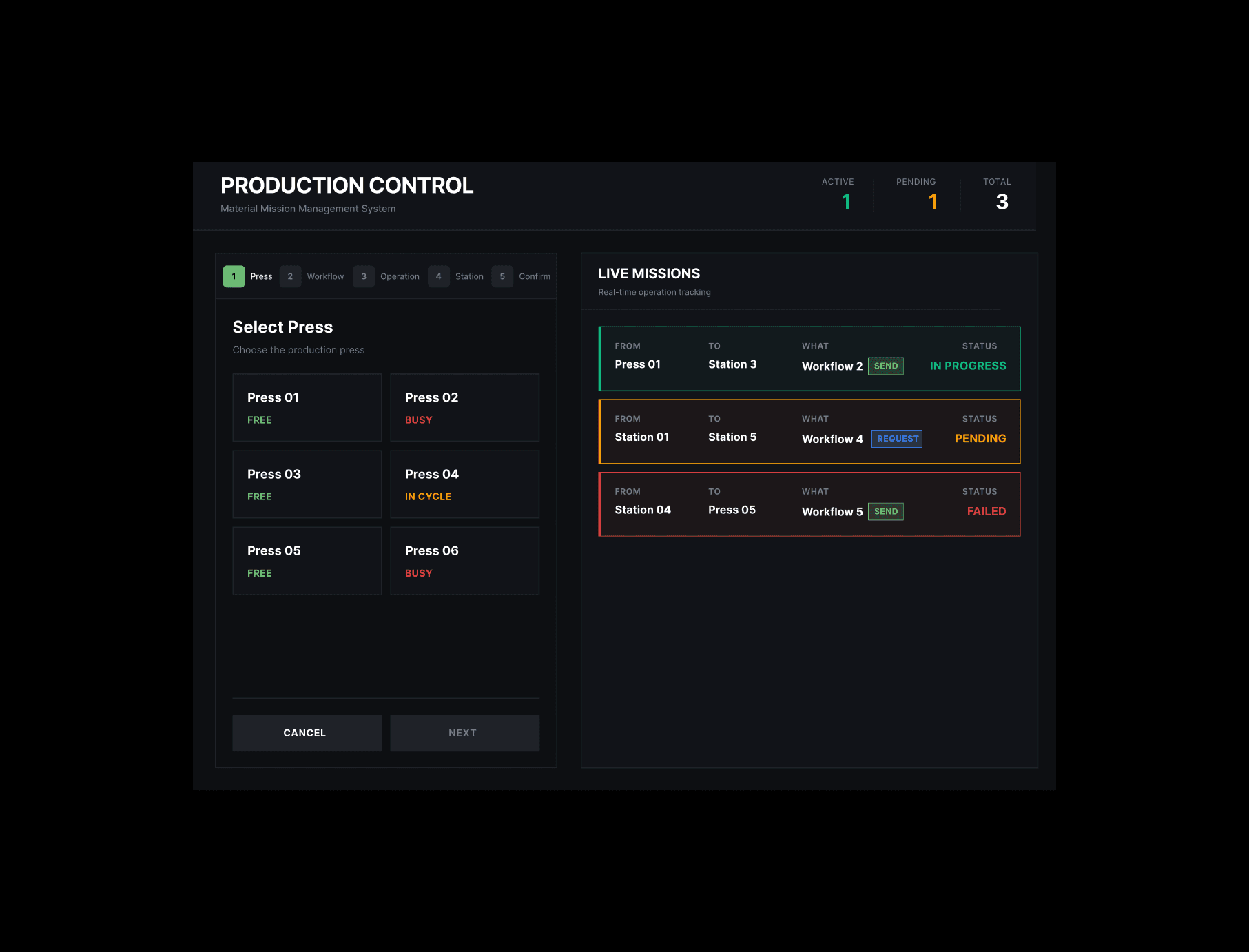
Production Operator

A fast, action-driven interface to keep production flowing.

  • Request raw materials

  • Send finished goods to the buffer

  • View station availability

  • Track batch progress

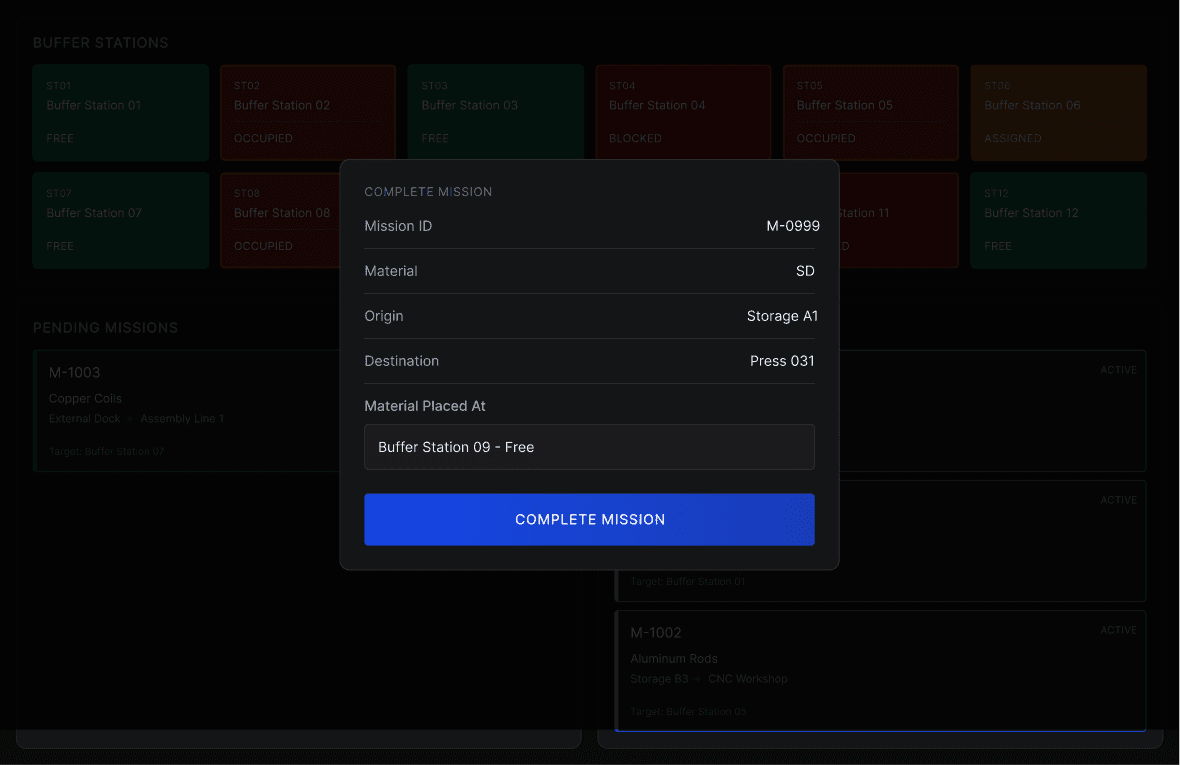
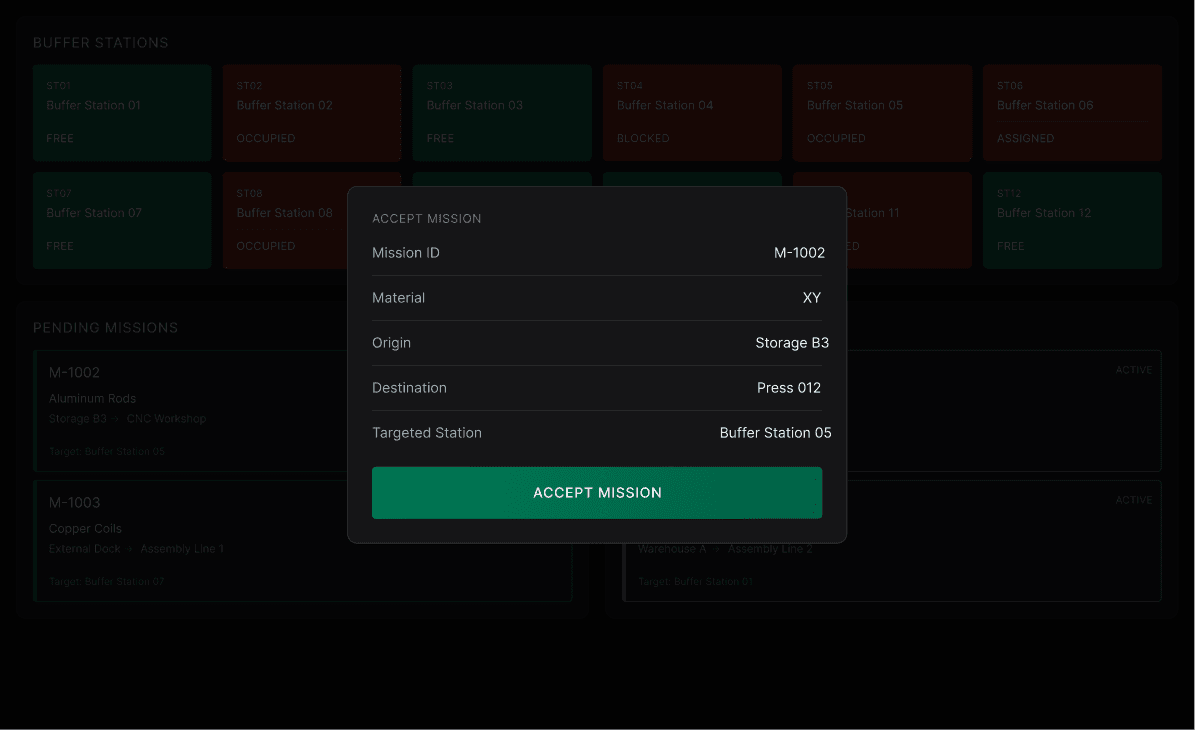
Warehouse Operator

A task-oriented interface for structured, error-free movements.

  • See pick-up and delivery tasks

  • Identify materials instantly

  • Follow optimized routes

  • Confirm actions to avoid mistakes

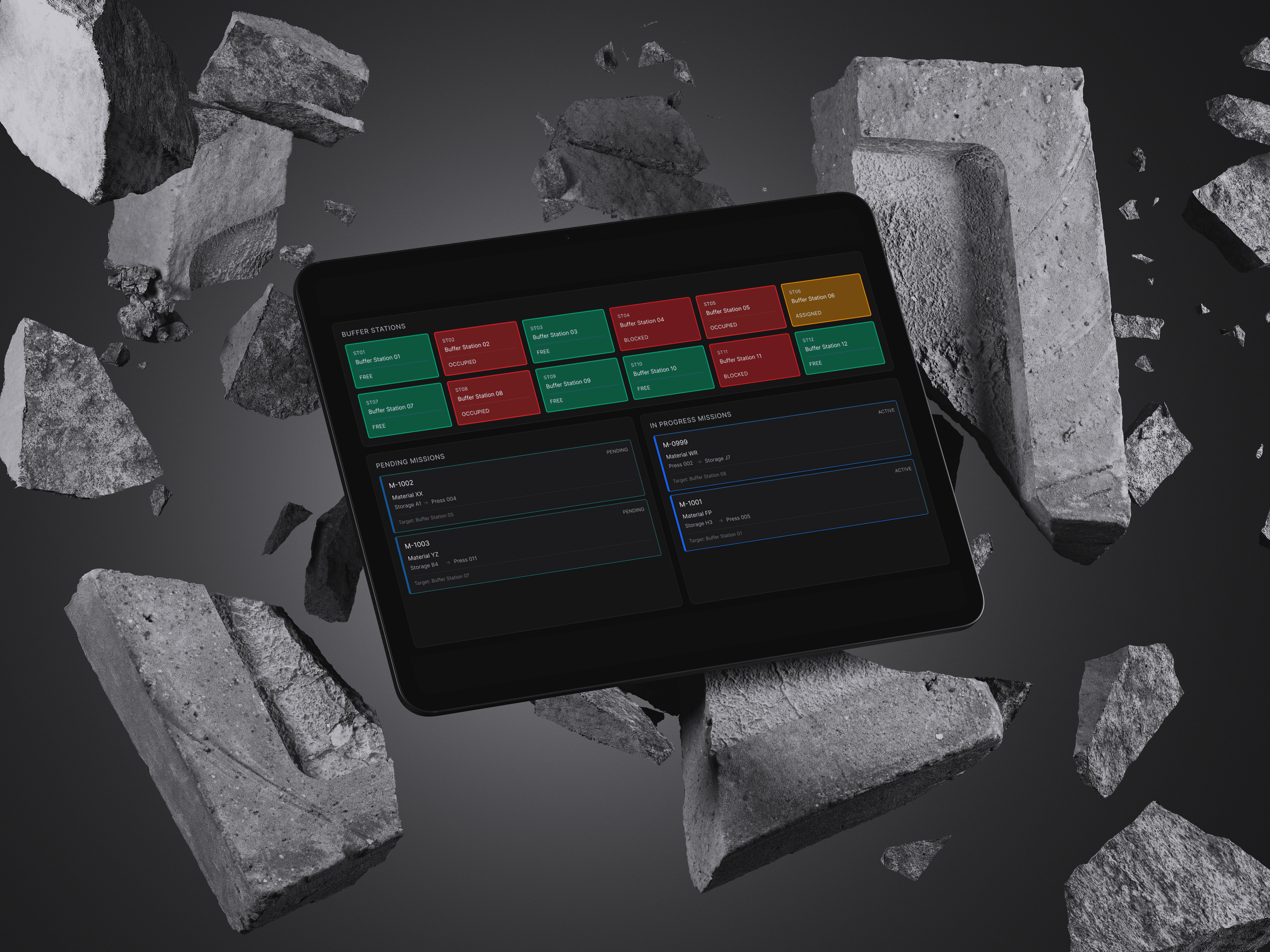
Plant Manager

A full overview to control performance and anticipate bottlenecks.

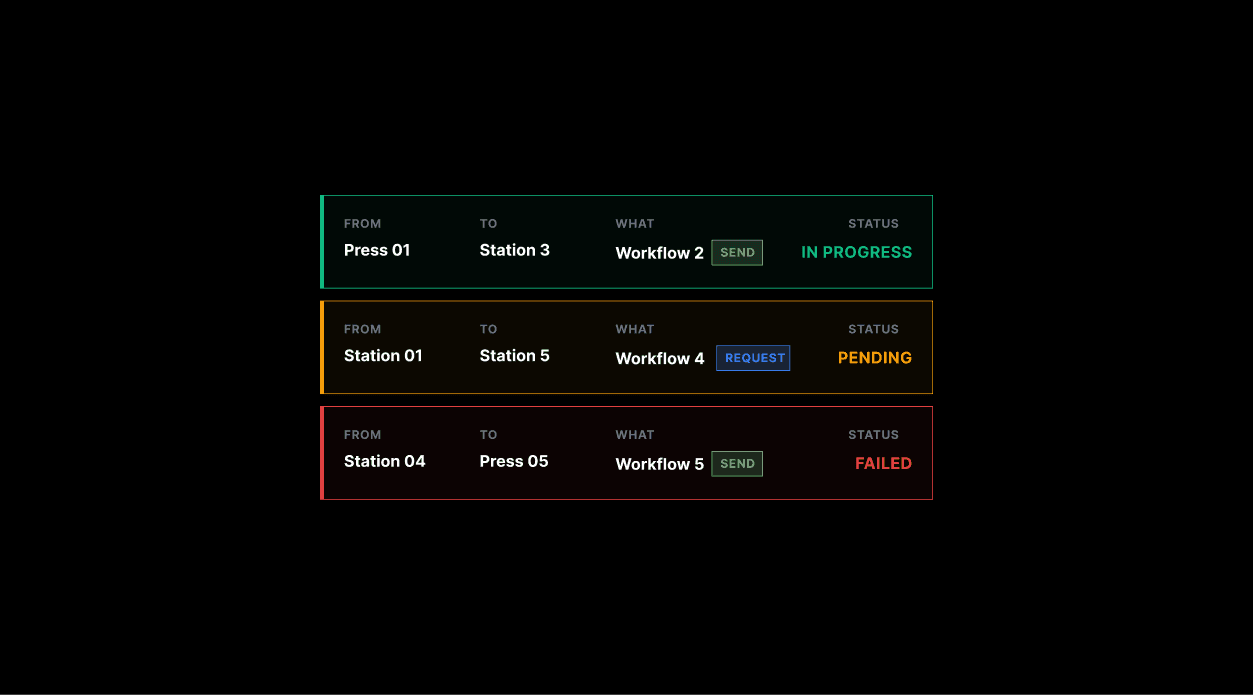
  • Real-time map of stations and flows

  • Mission tracking

  • Material status and availability

  • Alerts and deviations

4.

Validation & Iteration

The service team with our remote support ran iterative cycles with operators:

  • Paper prototypes tested on-site

  • Early digital prototypes stress-tested in real workflows

  • Adjusted flows based on operator feedback

  • Simplified complex interactions

  • Reduced redundant information

Result: a human-centered system built directly from field insights.
Outcomes

Operational Improvements
  • Real-time visibility eliminated blind spots across the entire plant

  • Operators aligned across three distant areas

  • Faster communication and reduced waiting times

  • Material tracking became reliable and predictable

Task Efficiency
  • Production operators performed requests/deliveries with a smooth and short process

  • Warehouse operators received structured tasks instead of verbal instructions

  • Managers evaluated performance and bottlenecks instantly

Process Control & Safety
  • Clearer workflows reduced errors

  • Automated tracking replaced manual guesswork

  • Safer material movement and fewer decision risks

Cultural Impact
  • A shift from “working by gut” to data-informed production

  • Standardized procedures

  • Stronger communication between roles

All images have been reworked with fictional data

Christian Murano

Christian Murano