Human-Centric Mobile Interface
All images have been reworked with placeholder data
2025
The Journey
1.
Discovery & Field Analysis
Goals:
Understand operator needs in real environments
Map the decision-making flow
Identify when automation was helpful vs harmful
Activities:
Shadowing shifts at end-of-line stations
Interviewing production managers
Monitoring throughput fluctuations
Identifying triggers that cause switching between modes
Key insight:
Automation must adapt to operators, not the other way around.
2.
System Mapping & Mode Architecture
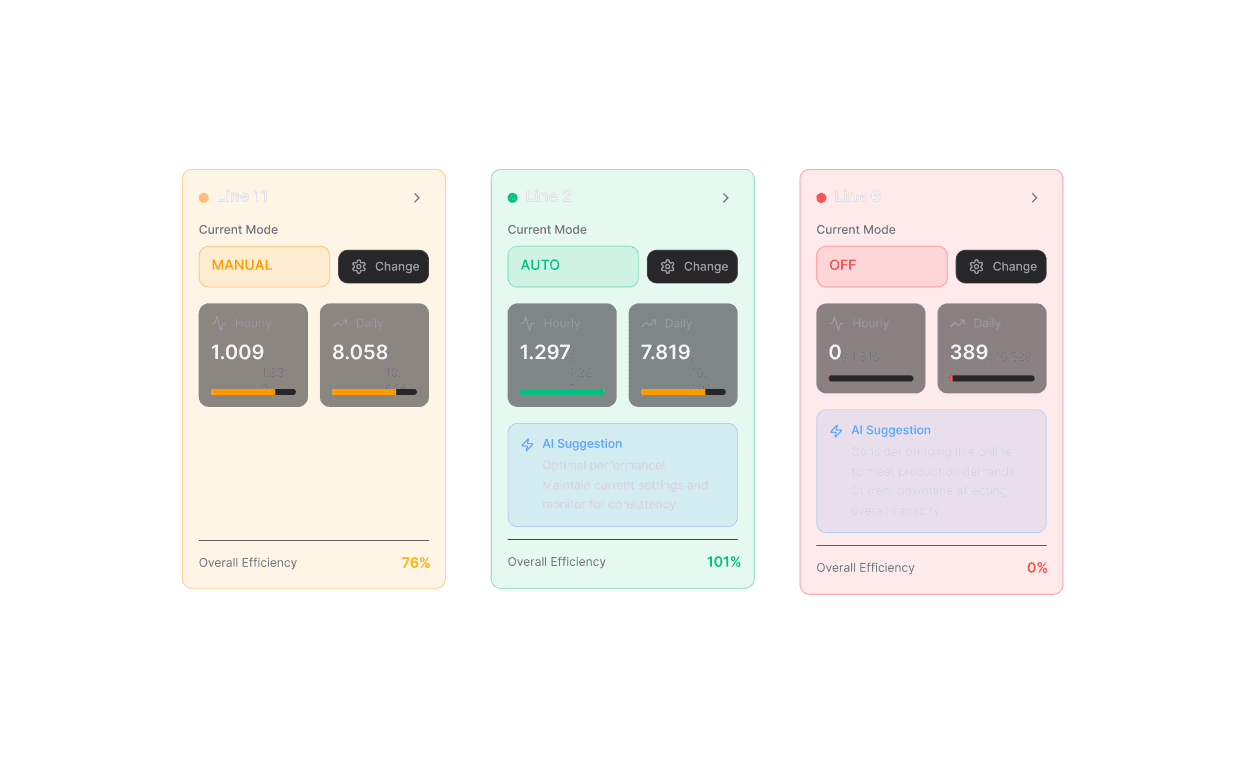
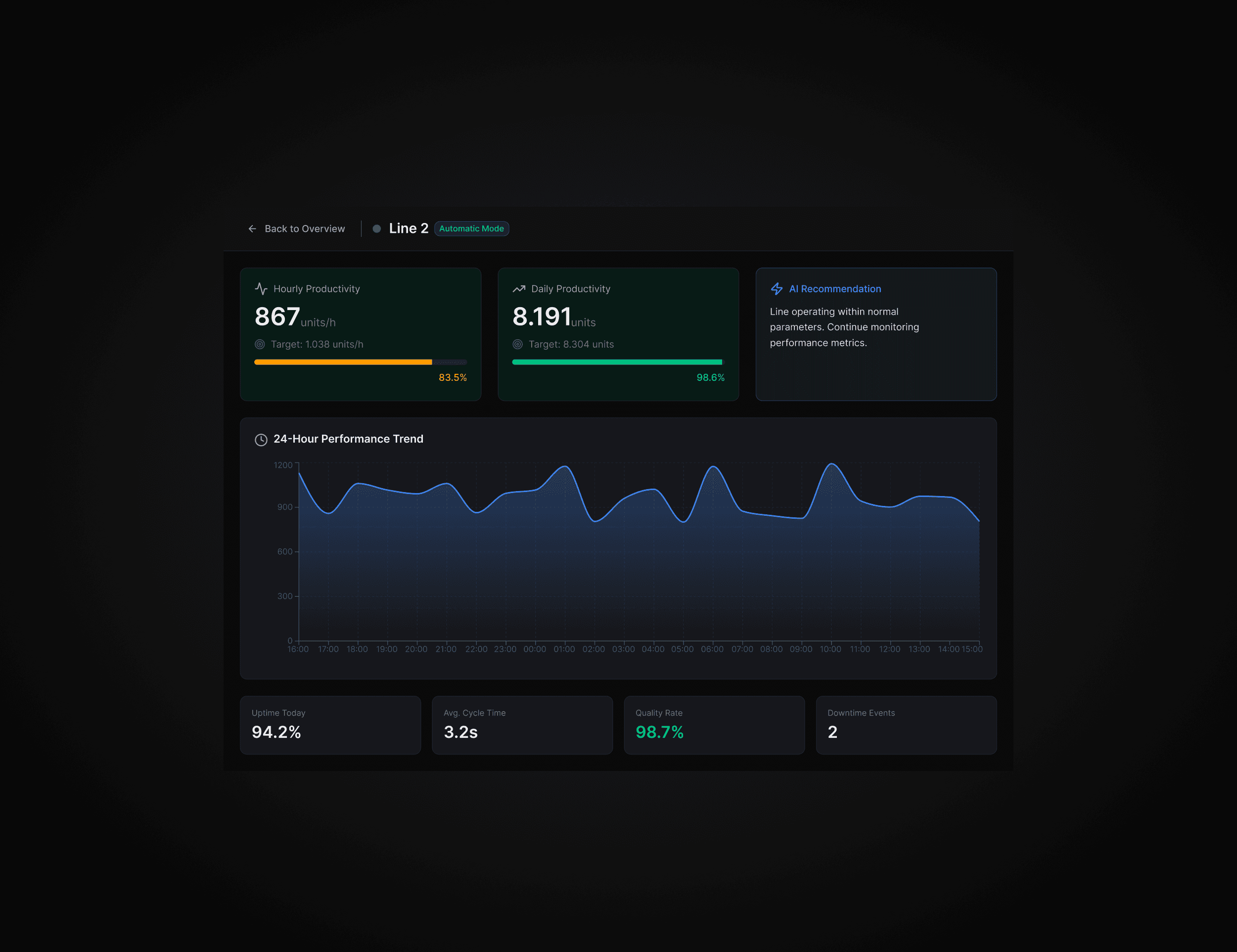
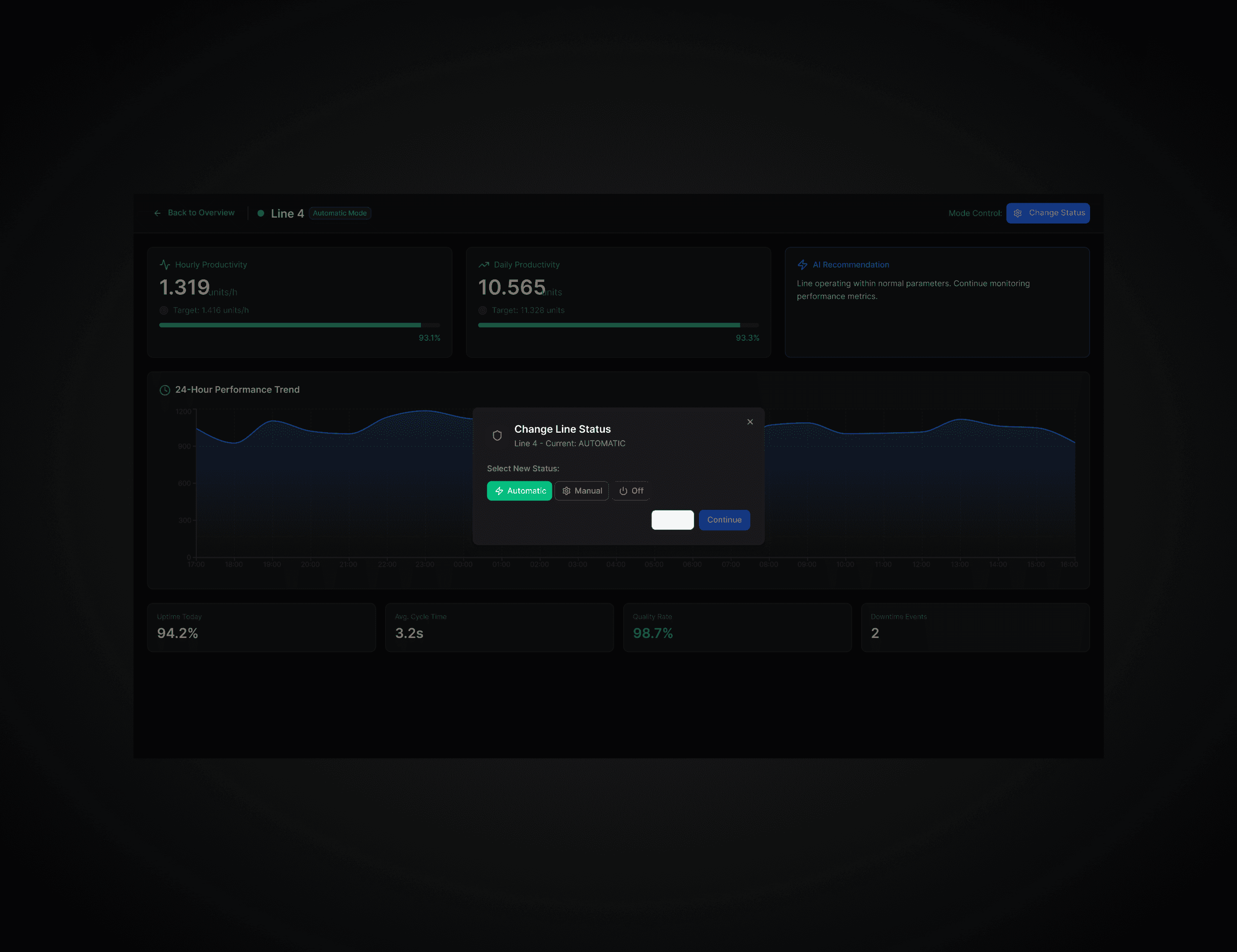
I structured the three operating modes:
Automatic Mode:
Palletizer manages the full cycle
Ideal when throughput is stable
Manual Mode:
Operator supports the palletizer
Used when throughput is low or inconsistent
Prevents idle time and production gaps
Off Mode:
Used when no material is incoming
Prevents unnecessary robot cycles
Then I mapped:
Alerts and thresholds
Performance indicators
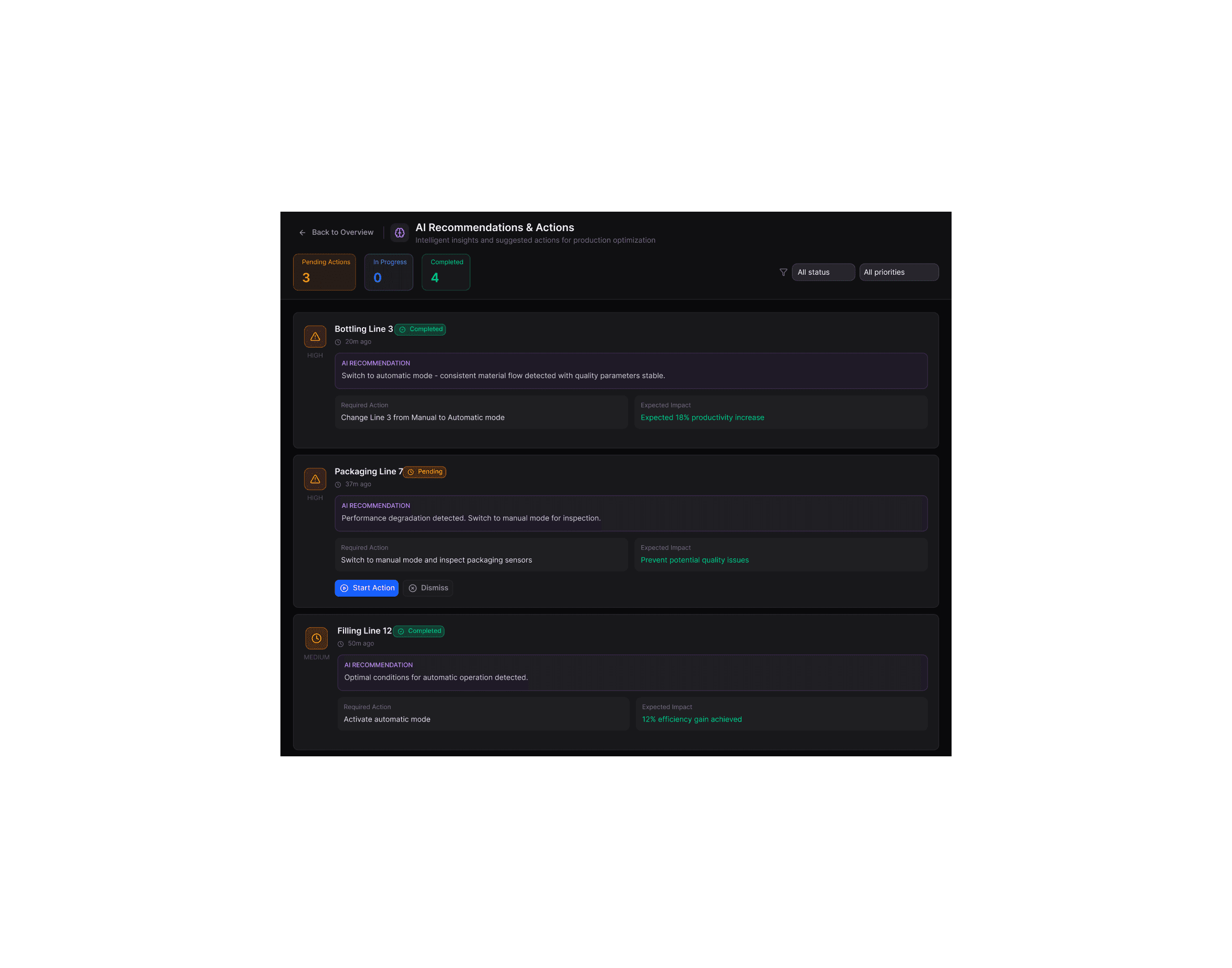
Throughput-based suggestions
Line dependencies
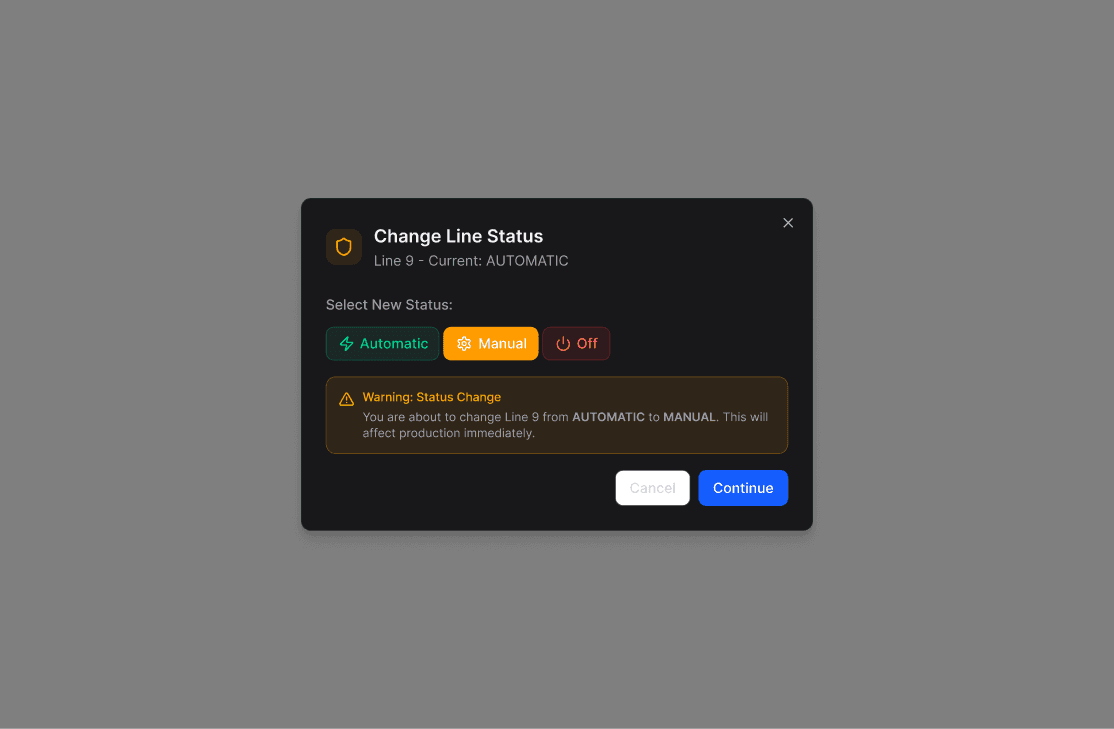
Operator actions and confirmations
This became the backbone of the mobile UX.
3.
Mobile Interface Design
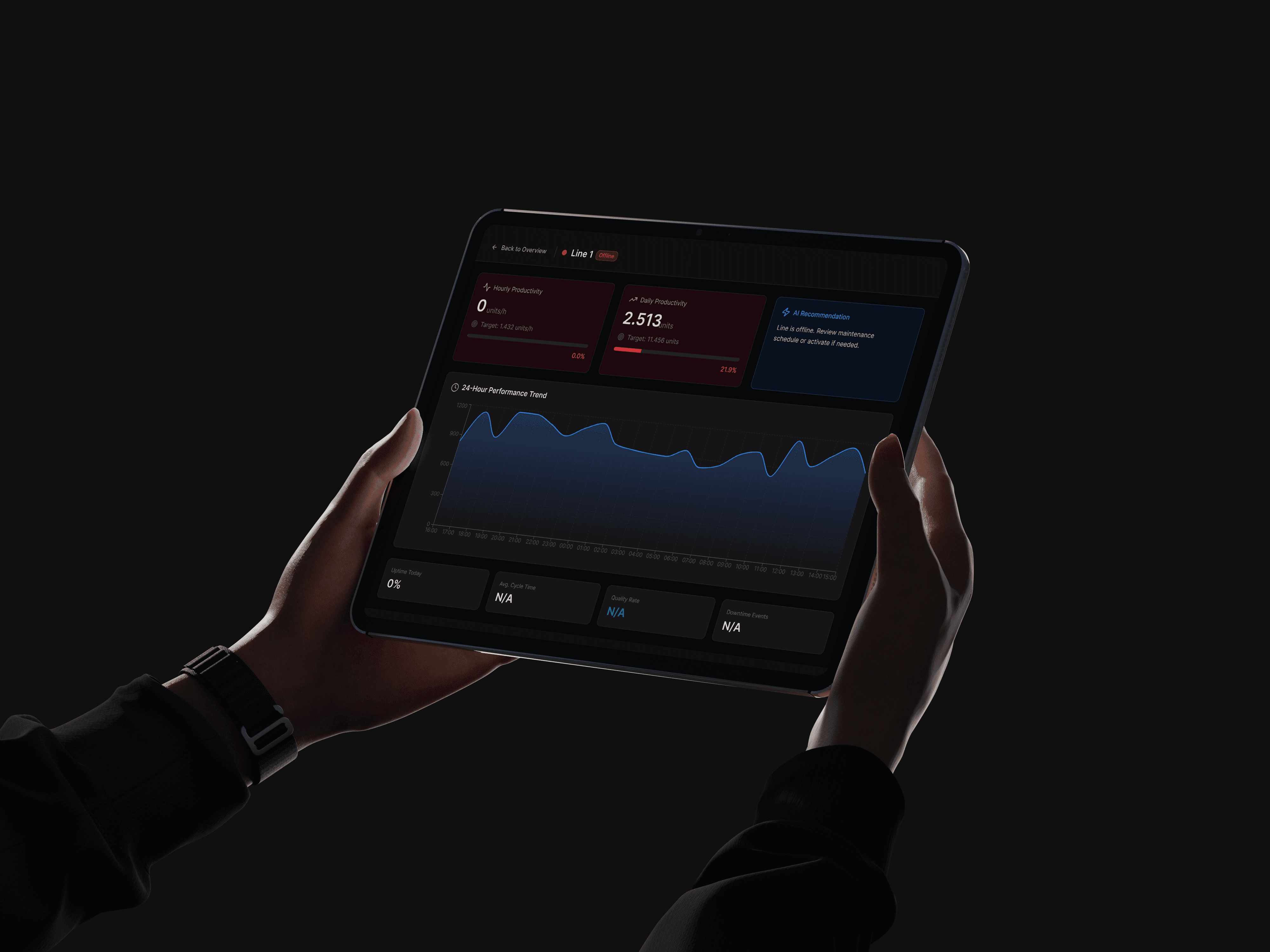
I designed a human-centric control interface, not a robotic one.
Core functionalities:
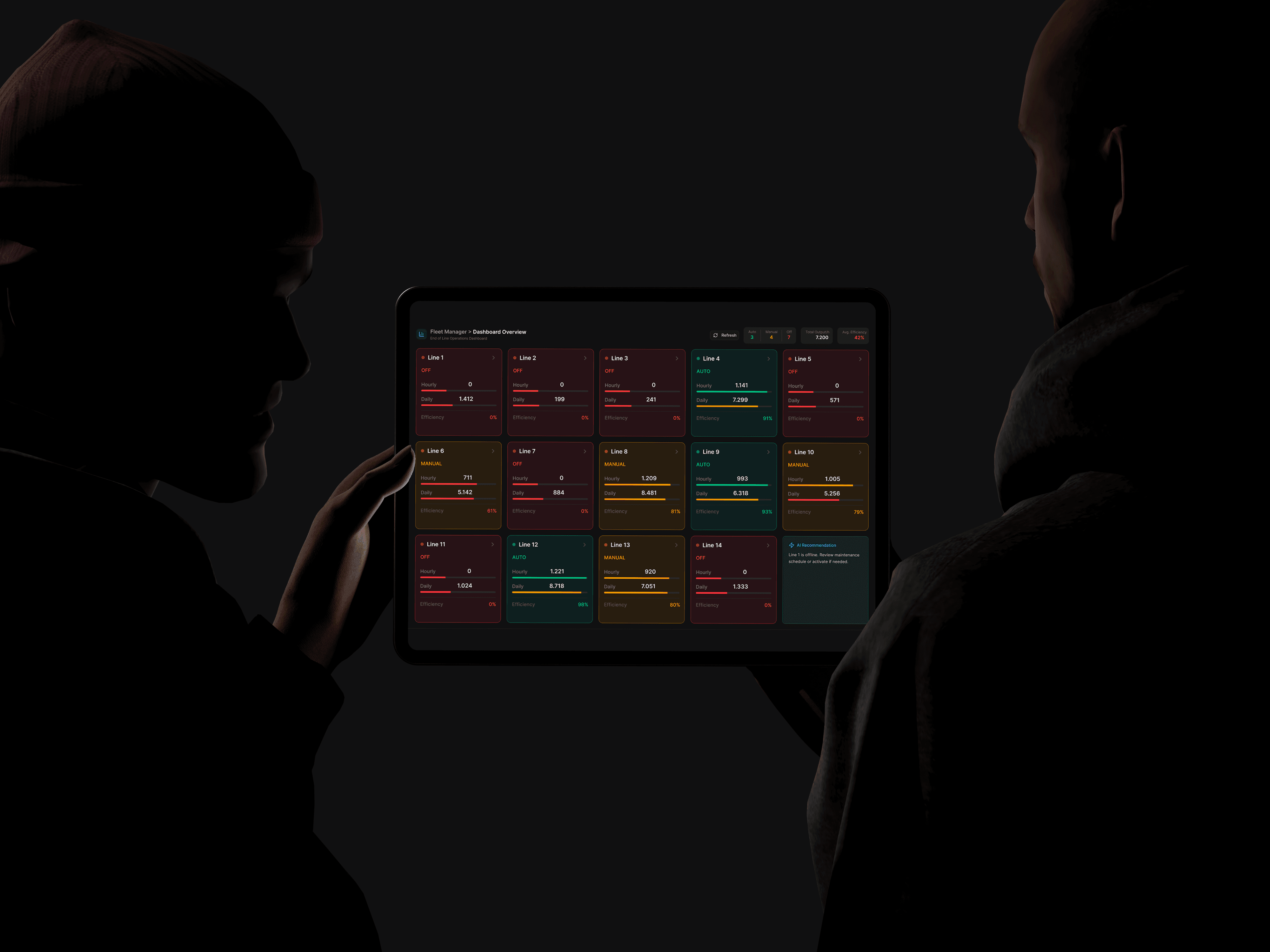
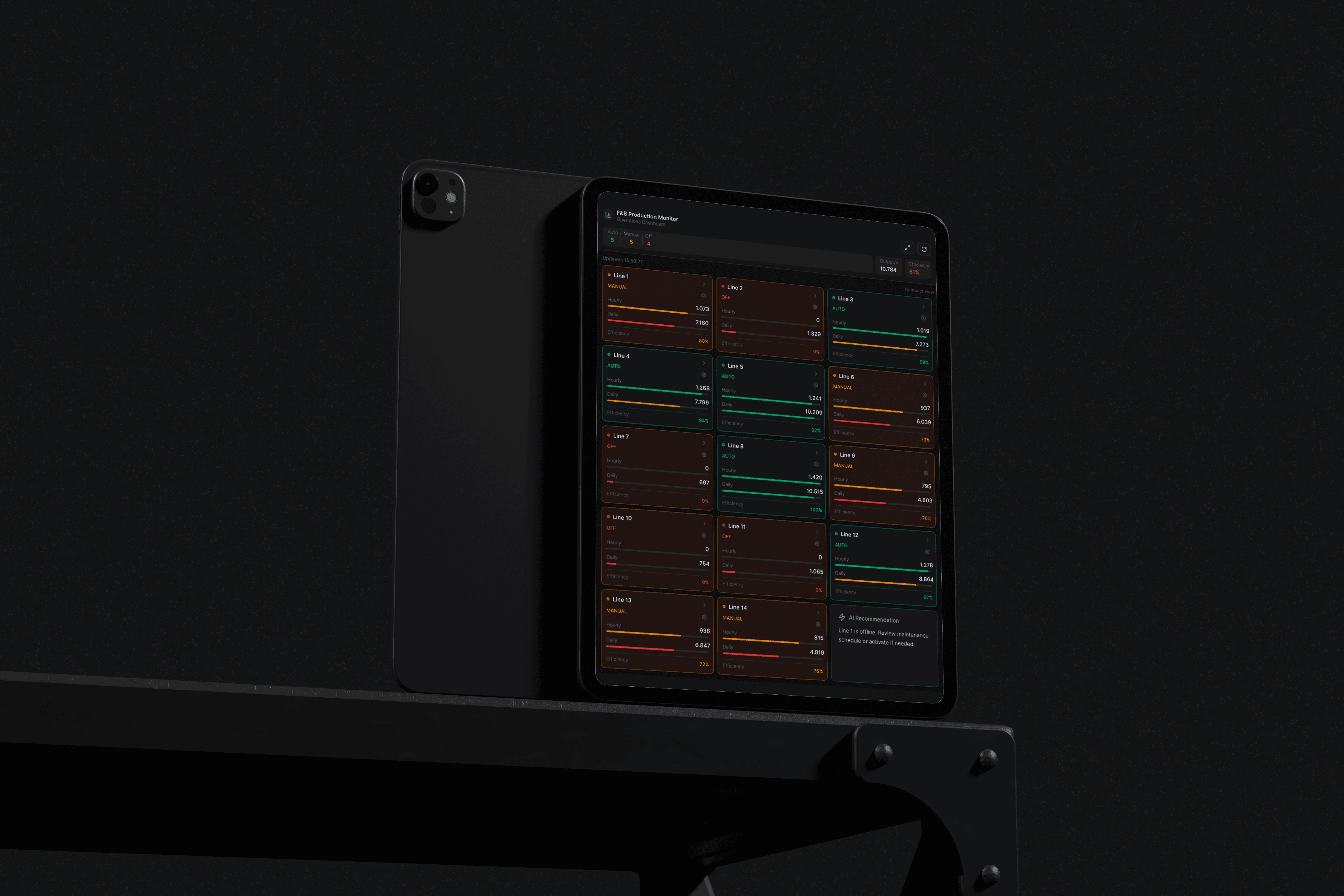
Real-time overview of all end-of-line stations
Instant mode switching per line
Throughput-based suggestions
Performance insights to prevent drops
Clear alerts when lines require manual assistance
Design Principles:
Elevate the operator, from executor to system controller
High legibility for industrial environments
Flexible autonomy, suggestions, not constraints
4.
Validation & Iteration
I validated the interface directly with users and plant manager:
Early sketches tested on the shop floor
Rapid prototyping in realistic lighting and noise conditions
Multiple iteration cycles based on real use
Reduced steps for mode switching
Improved clarity of line status indicators
Outcome
The full automation intervention led to a +30% in productivity
Performance Impact
More stable line throughput
Reduction in idle palletizer cycles
Faster reaction to low-production conditions
Operators empowered to make high-value decisions
Operational Impact
A unified view of all end-of-line stations
Consistent mode management
Clear guidance reduces decision pressure
Better synchronization between automation and human roles
Human Experience
Operators elevated from “manual labor” to system controllers
Strong adoption thanks to user-centered design
Automation perceived as a support, not a threat
All images have been reworked with fictional data